Point of Sale
The iPad terminal built for pizza.
Pizza Loop's POS is an iPad terminal built for pizza operations. Native half-and-half pizzas, size-by-topping matrix, delivery zone rules, ingredient-level inventory, staff scheduling, and integrated Pizza Loop Payments card acceptance. All in one system.
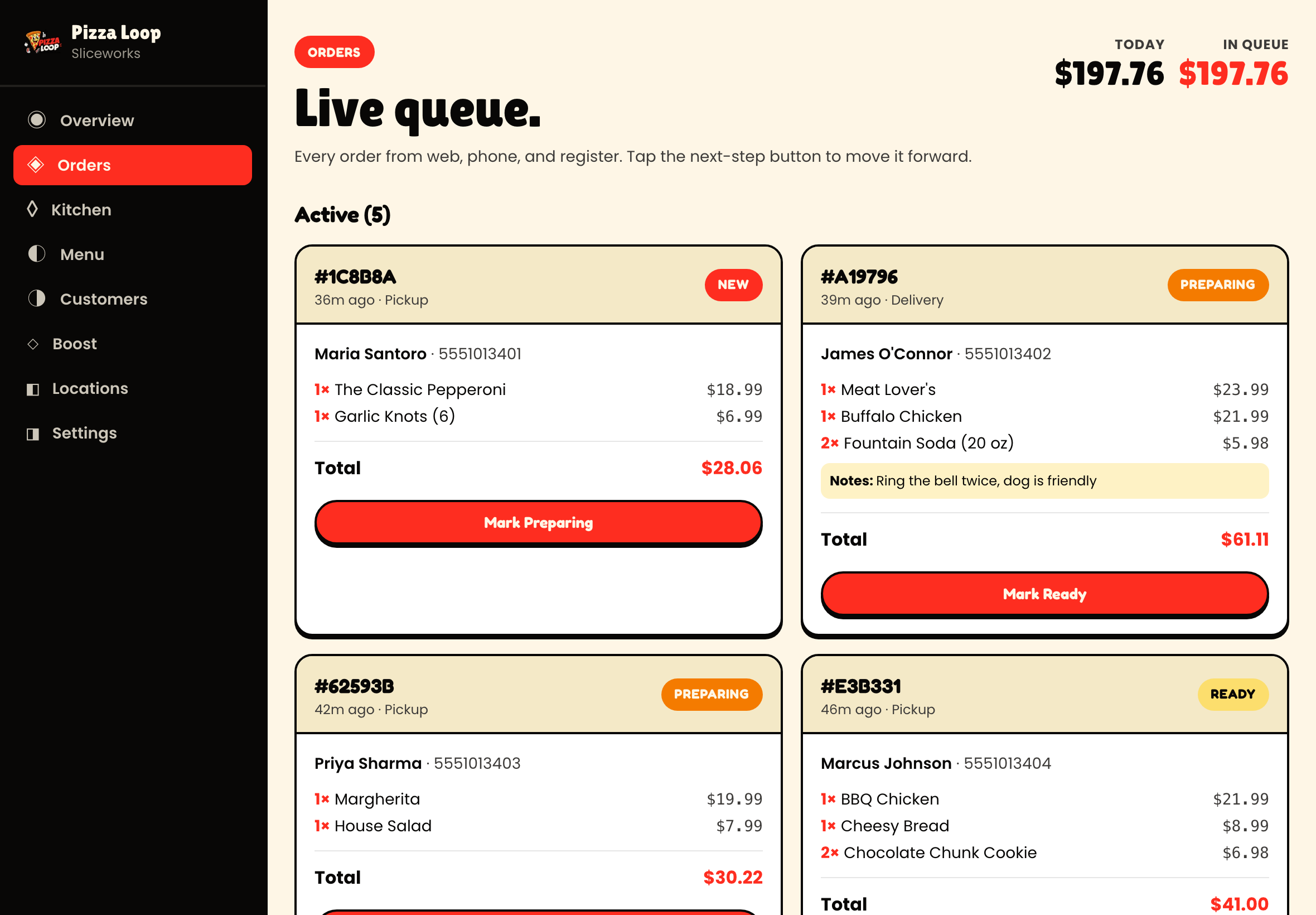
Live orders on the counter iPad.
Every screenshot on this page is from the live app running against a real demo shop. What you see is what you ship.
What makes a pizza-specific POS different
Every restaurant POS handles items and prices. That’s the easy 20%. Pizza breaks the other 80% — and that’s where generic restaurant POS systems fall down.
Modifiers on pizza aren’t linear. A large pepperoni pizza with extra cheese, half mushroom, isn’t a modifier stack in a single direction. It’s a spatial concept — this half, that half, this crust, that topping — with per-size, per-topping pricing that has to compute correctly for every combination.
Delivery on pizza has zone economics. Not one radius, not one fee. Multiple zones with different minimums, drive-time caps, and per-zone delivery charges. Try to model this in a generic POS and you end up building a manual pricing sheet next to the terminal.
Inventory tracks by ingredient. A pepperoni pizza takes 8 slices of pepperoni. When the register rings one up, you want the pepperoni count to go down by 8. Same for cheese, dough, sauce. Generic POS systems track SKUs. Pizza needs ounce-level ingredient tracking.
Pizza Loop’s POS is built for these first.
What’s in the box
- iPad terminal for the front counter, dedicated to order entry. Works with existing iPads or new ones we ship as part of setup.
- Pizza Loop Payments card reader for card-present payments. Tap, swipe, chip, contactless. All included in your setup fee. Card processing is 3.2% + $0.05 in-person, integrated straight into the terminal.
- Receipt printer connected via network, prints kitchen tickets, customer receipts, and delivery labels.
- Cash drawer integration with automatic open on cash sales.
Half-and-half done right
Mark any pizza as half-eligible in the menu builder. When a customer opens that pizza on the storefront, each topping gets three pills: Whole, L half, R half. Pick one per topping. The picker computes the price live so there are no surprises at checkout.
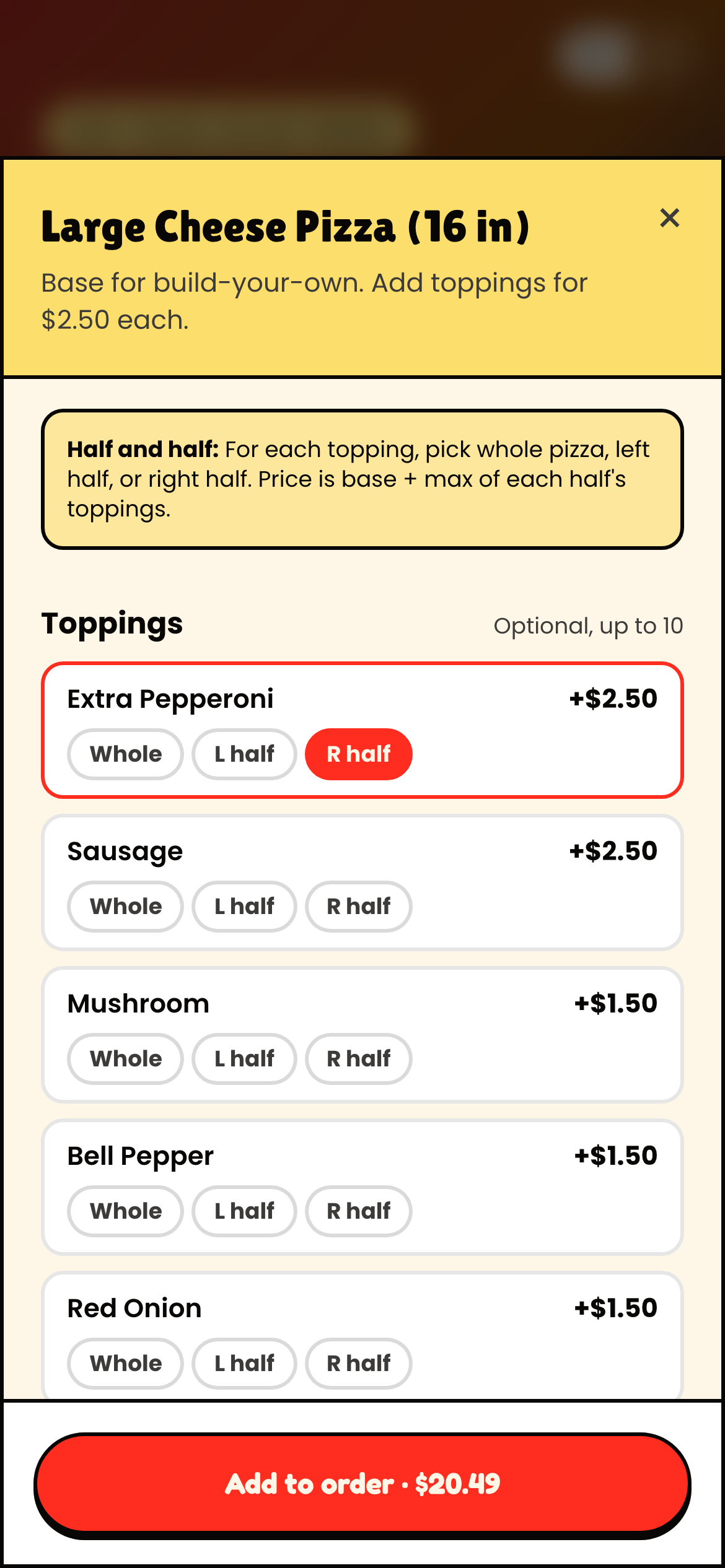
Kitchen ticket prints:
LARGE Cheese Pizza (16 in)
  L: Extra Pepperoni
  R: Mushroom
Pricing rule: base + whole extras + max(left extras, right extras). That is how every real pizza shop prices splits and it is how Pizza Loop prices them out of the box. No modifier stack, no wrong pizza going out.
Size × topping matrix pricing
Set your topping prices once, per size:
| Size | Cheese base | Add per topping |
|---|---|---|
| Small | $9.99 | $1.50 |
| Medium | $12.99 | $2.00 |
| Large | $15.99 | $2.50 |
| X-Large | $18.99 | $3.00 |
Change a topping price at Medium size only? Override in one cell. The matrix drives your entire menu, online ordering, and third-party delivery integrations.
Delivery zones that match reality
Draw your zones on a map. Assign a minimum-order value, delivery fee, and drive-time cap to each. Pizza Loop’s online ordering and phone-order flow enforce them automatically. If a customer at 4.5 miles tries to order in a zone that’s $30-minimum and their cart is $22, the system prompts them to add more or splits into a pickup option.
Ingredient inventory that decrements itself
Build your recipes once. Every pepperoni pizza gets 8 oz of dough, 4 oz of sauce, 4 oz of shredded mozzarella, 0.75 oz of pepperoni. When an order rings up, those ingredient counts decrement. When you’re running low, alerts fire. When Friday hits and pepperoni is at 20% of the target, you know before you’re actually out.
Weekly food-cost reports drop into your dashboard. Compare against your target 28-32% ratio.
Staff + scheduling built in
Shift builder. iPad clock-in and clock-out. Tip-pool math automated per your rules. Payroll export in one click.
What Pizza Loop’s POS doesn’t do (yet)
- Full-service dining reservations — we’re delivery + takeout + counter-service focused. If your pizza place also runs a full sit-down concept with servers, Toast still fits better.
- Bar module — no full drink program integration yet. Beer + wine sold as menu items works fine.
How it connects to everything else
The POS isn’t standalone. Every order flows into your customer database, decrements inventory, triggers loyalty points, opens the review-request flow at the right time, feeds your marketing reports, and hits your multi-location dashboard in real time.
That’s the whole point of the Loop — every part is the same system, not five vendors bolted together.
See Point of Sale in action
Book a 20-minute walkthrough. We'll show you exactly how it works for your shop.